Read a preview
The Name on the Instrument
A Field Guide for the Surgeon Inventor
Start reading before you buy. Below you will find the full table of contents, the Foreword, the Introduction and the opening of Chapter 2. Chapter 1 is yours free by email.
Inside the book
Contents
- ForewordRead it below
- IntroductionRead it below
- 1. The Golf Club Principle: A Historical PerspectiveFree by email
- 2. Does Your Idea Genuinely Solve a Problem?Read the opening below
- 3. Protecting Your Idea
- 4. What Is Your Idea Really Worth?
- 5. The Innovation Department: The Promise
- 6. The Innovation Department: The Contract
- 7. Turnkey Is a Myth
- 8. Single Use or Reusable?
- 9. The Quality System Nobody Sees
- 10. Sourcing the Right Manufacturer
- 11. The Four Hundred Dollar Scissor Test
- 12. Clearance
- 13. The Slowest Sale Is at Home
- 14. Evidence Based Adoption and the Sixty Percent Rule
- 15. GPOs, Formularies, and the Savings Question
- 16. Surgeons and Engineers: Speaking Each Other’s Language
- Problems on the Tray
- Acknowledgments
- About the Author
Paperback, 136 pages.
Foreword
The tools can be better
This book is written for the next Albert Rhoton. It is written for the next Mayo brothers, wherever they are right now, a resident on hour eleven of a call shift, a fellow watching an attending fight an instrument that should be helping, an engineer who has never scrubbed into a case but suspects the tools could be better. It is written for anyone who believes, as I do, that surgical instruments are not a solved problem, and that the people who will take them to the next level have not yet been convinced to try.
Let me tell you why I care, because the why is the whole book. I have a passion for tools that I hold very dear, and it has become my life’s mission in the most literal sense: I have built companies, crossed oceans, and spent my career on a single idea, that surgeons deserve an armamentarium equal to their hands. Give a surgeon better instruments and everything downstream improves. The operation goes better and faster. The patient’s outcome improves. The team’s day gets shorter. And, the part almost nobody talks about, the surgeon’s career gets longer, because simplified, well made instrumentation spares the body that has to wield it, case after case, for decades.
Here is what I see that most people in the operating room never do. I can watch a surgeon struggling with an instrument when nobody in the room knows he is struggling, when he himself does not know it. An awkward stance held a few seconds too long. A hand twisted a few degrees past comfortable. A lean, a shift, a tilt of the head to buy a better view or a better angle, because the instrument would not offer one. None of it registers as struggle. All of it is struggle. These small accommodations, repeated thousands of times across thousands of cases, are what make surgery harder than it needs to be, and they are invisible precisely because skilled surgeons absorb them so gracefully. Making those moments better, one instrument at a time, is what I do, and it is why this book exists.
The names on the instrument tray, Kerrison, Mayo, DeBakey, Rhoton, were put there by people who refused to accept the tools they inherited. Every one of those names was once a frustrated clinician with an idea and no map. This book is the map I wish someone had handed them, and the honest accounting of the terrain I wish someone had handed me. If it convinces even one of you to pick up the tradition, to look at the tray as a draft rather than a finished document, it will have done its job.
The tools can be better. The people who will make them better are reading this page.
Alexander C. Ebner
Florida
Introduction
Why I Wrote This
I did not write this book to talk anyone out of inventing. I wrote it to talk more surgeons into it, with their eyes open.
For more than a decade I have run a company that develops and manufactures surgical instruments, and in that time a steady procession of surgeons has come to me with ideas. Some arrive with napkin sketches. Some arrive with 3D printed prototypes and a patent number. Almost all of them arrive with the same two assumptions: that the idea is the hard part, and that the road from idea to operating room is shorter than it is. This book exists because I have had the same conversation hundreds of times, and it deserves to be had once, properly, in writing.
The deeper reason is this. The surgeons I admire most are not only excellent operators. They are the ones who refuse to accept that the way a procedure is done today is the way it must be done tomorrow. That restlessness is the oldest tradition in surgery. Cushing did not accept the instruments he inherited. The Mayo brothers did not accept them. DeBakey did not, and Rhoton, who designed more than two hundred instruments over a career, certainly did not. Every one of them advanced the field and improved the outcomes of patients they would never meet because they treated the instrument tray as a draft rather than a finished document. I want more surgeons to think that way. I want the resident who is frustrated by a tool to understand that the frustration is data, and that acting on it is part of the job.
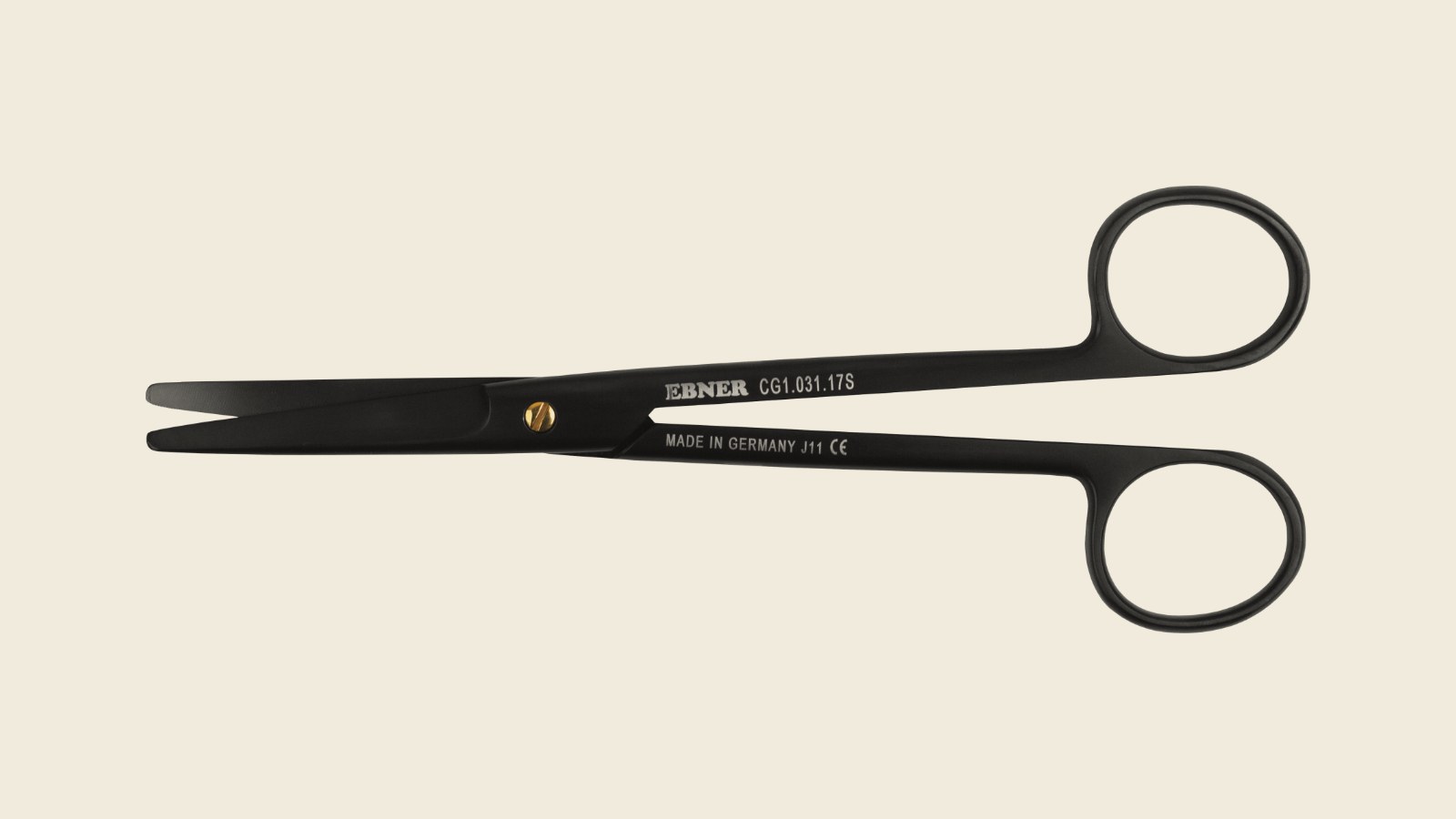
Let me show you what I mean with the humblest instrument in the set. A scissor is just a scissor, until you need it to cut a straight line. Watch a closing at the end of a long case. With a quality scissor, the tissue and suture part cleanly along the intended line, the closure comes together evenly, and the patient is left with a clean scar, visible or beneath the skin, that approximates well and heals better. With a mediocre scissor, the line wanders, the edges are ragged, the closure fights the surgeon, and the patient carries the difference for life. Nothing about that outcome required a breakthrough. It required someone, at some point, to refuse to accept a scissor that could not do its one job perfectly.
That is the standard this book argues for, and it is worth stating as a principle before we go any further. Every innovation in surgery has to fix something. The improvement can be large or small, a new corridor or a cleaner cut, but it must remove a real failure from the room. And the inverse is equally true: accepting mediocrity in the instruments used to perform surgery is the root of wasted time, wasted efficiency, and worse patient outcomes. The dull scissor, the nibbling rongeur, the retractor that never quite holds, each one taxes every case it touches, quietly, forever, until someone with standing to notice decides that the tax is optional. Surgeons have that standing. This book is about what to do with it.
What I owe that resident, and every surgeon who reads this, is honesty about what acting on it costs. The clinical insight is free. Everything after it is not. There are validations that cost more than a car, quality systems that bill six figures a year whether anything sells, purchasing committees that will scrutinize the inventor harder than any stranger, and federal statutes that police the very royalty that motivated the work. There are institutional offices that will promise a smooth road and cannot deliver one, and manufacturers who will decline the work because the economics never close. None of that is a reason not to build. All of it is a reason to know the terrain before spending a dollar.
This book is written for surgeons first, because they bring me the ideas. It is written for engineers second, because they build the ideas, and because the single greatest obstacle I have watched kill good products is not money or regulation but the gap in empathy between the two professions. Surgeons rarely see the mechanical and regulatory limits of production. Engineers rarely see the end user, gowned and tired, working at depth in a narrow corridor with a patient’s dura a millimeter away. By the last chapter I hope each side will read the other a little better.
A note on candor. The stories in this book are real. The costs are real figures from real projects, presented as representative estimates. Where the experience is mine alone and may not generalize, I say so. Where the law is involved, I describe the terrain and tell you plainly that I am a manufacturer and not a lawyer. And where stories appear in these pages, they are told as what they are, patterns drawn from real projects across many institutions and many years, because the lessons matter and the names never did.
It does not get easier. You get stronger. Let us begin.
Chapter 2
Does Your Idea Genuinely Solve a Problem?
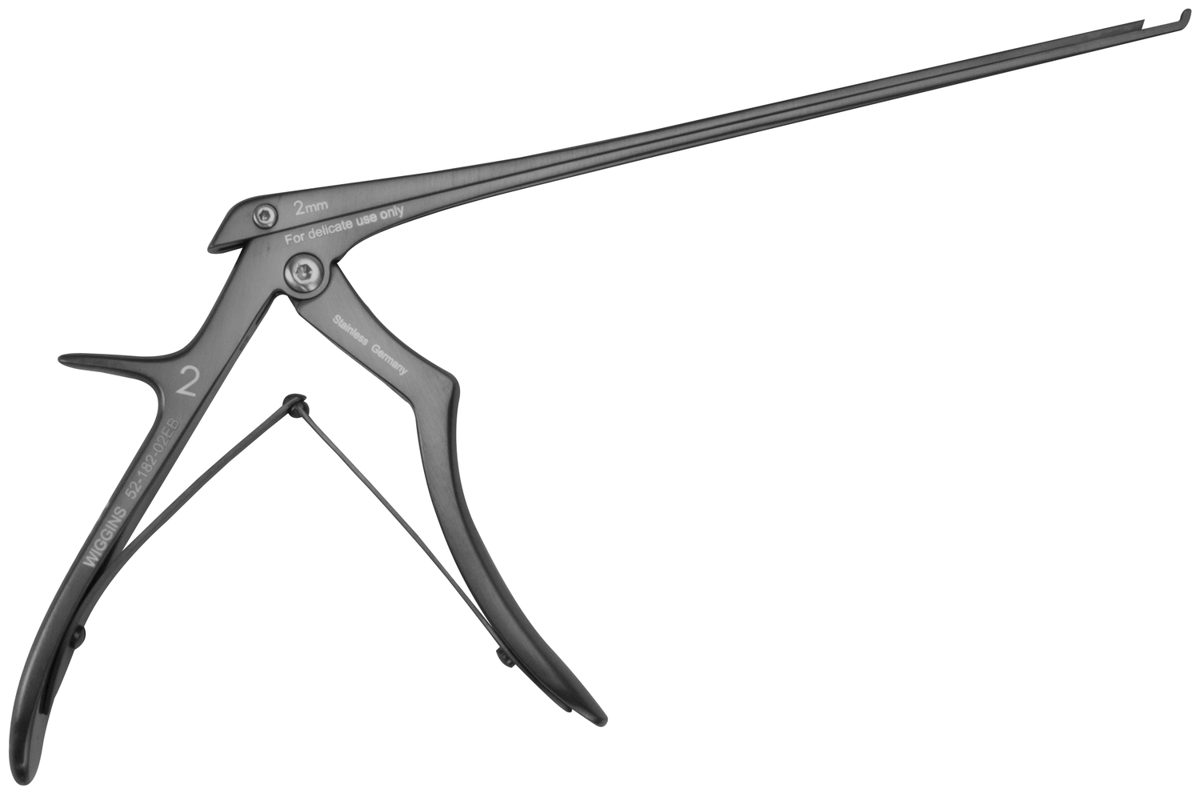
I built my entire company on a single instrument, and I did not invent it. I simply refused to accept how badly it worked.
The Kerrison rongeur is one of the most used and most cursed instruments in spine and cranial surgery. It is the punch that removes lamina and bone around nerves, and when it is right, it is a joy: a clean bite, a satisfying click, bone removed in confident, controlled pieces. When it is wrong, it is one of the most dangerous objects in the room. And it is wrong constantly.
I spent thousands of cases standing in operating rooms watching the same scene repeat. The surgeon takes the number two Kerrison, sets the footplate, squeezes, and the instrument does not cut. It nibbles. It crushes a ragged edge instead of punching a clean one. The surgeon mutters, tries again, then calls out for another number two. The replacement is no better. Someone phones central sterile, and an instrument technician appears to explain that the set was just sharpened this week and should be good. The surgeon, who is holding the evidence that it is not good, hands it back and asks for the tray from the other room. A laminectomy that takes five minutes with a sharp Kerrison stretches toward two hours with a dull one. And the danger compounds with the delay, because a dull Kerrison does not just work slowly. It skips. It slides off the bone it failed to bite, and when it does it can pierce the dura, and now the case has a durotomy, a repair, a longer anesthetic, more trauma, and a different conversation with the family. All of it downstream of a cutting edge that nobody in the building could verify.
Every person in that room acknowledged the problem. The surgeon complained about it. The technician had a script for it. The circulator had a workaround for it. It appeared in no product catalog as a problem, and no one in the chain owned it. That is what a genuine problem looks like: universally experienced, universally acknowledged, and unsolved not because it is impossible but because it sits in the seams between the people who could solve it. When I finally committed the company to the Kerrison, I was not chasing an invention. I was chasing a complaint I had heard a thousand times from a hundred different mouths. That is the strongest market research that exists.
It is worth describing what I actually did with that research, because the method matters more than my particular instrument, and because the research was not always gently gathered. Some of it was hurled at me. Ask anyone who has covered cases as the fill in rep and they will know exactly what I mean. The regular implant representative is unavailable, and you are the one who shows up, because you are always the one who shows up, including for the early morning case on Easter Sunday when nobody else in the industry would answer a phone. And when the Kerrison nibbles instead of cuts in that room, the choice four letter words are not always aimed carefully. They were not aimed at me, exactly. I was simply the only person from the industry standing there to receive them. I stood there, I received them, and I wrote down every single one, because a surgeon cursing an instrument at six in the morning on a holiday is delivering the most honest product feedback that exists, free of charge, with emphasis.
I did not start with engineering. I started with accounting, of a kind: cataloging the complaint. Which sizes drew the most frustration. At which point in the case the failures clustered. What the workarounds were, and what each workaround cost in minutes. Whether the problem was the instrument’s design, its manufacture, or its maintenance, because those three failures wear the same disguise in a surgeon’s hand and demand entirely different fixes. Only when the complaint was mapped did the engineering questions become answerable, and by then, half of them had answered themselves. The company that resulted was built on an instrument I did not invent and never needed to, because the opportunity was never the invention. It was the gap between what the instrument was supposed to do and what it reliably did, a gap everyone could see and nobody owned. If you remember one operational lesson from this chapter, make it this: before you design anything, spend real time cataloging the complaint. The catalog will either kill the project cheaply or hand you the design requirements for free, and both outcomes are worth more than the sketch you were tempted to start with.
The chapter continues with the three tests every surgeon inventor should apply before spending a dollar, and the workaround so old it has become technique.
Free sample chapter
Get Chapter 1 by email
The Golf Club Principle: A Historical Perspective.
Why no serious manufacturer would design a golf club without professional golfers, how a name really attaches to an instrument, and what Kerrison, Cushing, the Mayo brothers and Rhoton were actually paid. Enter your name and email and we will send the full chapter as a PDF.
We will only use your email to send the chapter and an occasional note about the book. Unsubscribe any time.
"It does not get easier. You get stronger."
Excerpted from The Name on the Instrument: A Field Guide for the Surgeon Inventor. Copyright © 2026 by Alexander C. Ebner. All rights reserved.